The workshop is not the deliverable. What happens after a journey mapping workshop, in the days and weeks that follow, is what decides whether the map changes a single decision or becomes a photo in a channel no one reopens.
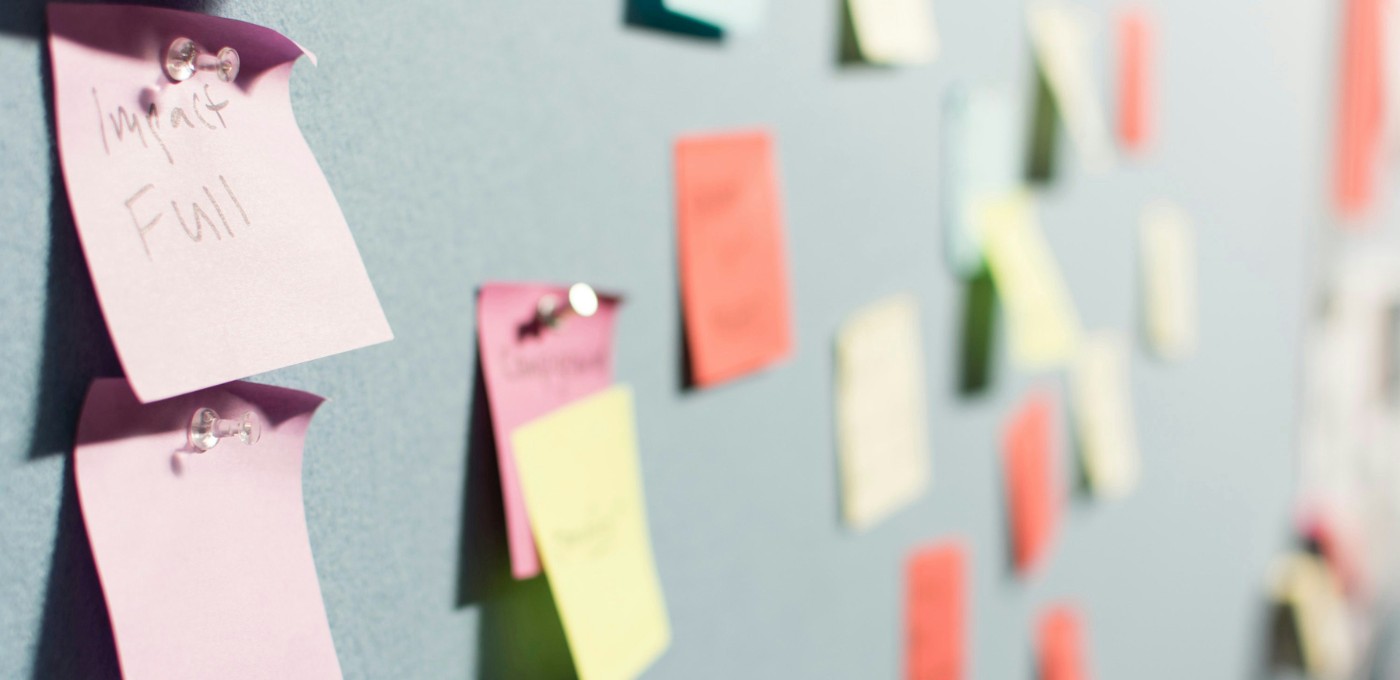
Most teams get the workshop right. The room is engaged, the sticky notes pile up, real pain points surface, and everyone agrees it was time well spent. Then the momentum leaks away. No one digitizes the wall. No one is clearly on the hook for the priorities. The follow-up meeting never gets booked. Six weeks later the map is out of date and out of mind, and the next time you propose a workshop, people remember the last one went nowhere.
This is where journey map governance starts, and it is a core part of the broader practice of customer journey management: turning a one-off workshop output into a working document that keeps informing decisions. The good news is that the after-phase is not a second big project. It is a short, repeatable sequence you can run every time.
Why the map dies after the workshop
Map quality is rarely what decides this. The three failures below are all about what happens around the map: nobody is responsible for it, no review is scheduled, and no single copy is trusted.
No one owns it
When a map belongs to "the group," it belongs to no one. There is no single person accountable for keeping the current version accurate or for convening the next conversation about it.
There is no cadence
Nothing is scheduled. The map only gets looked at if someone happens to remember it, and memory loses to the next deadline every time.
There is no single home
The map exists as a photo in one person's phone, a rough digital copy in someone's drive, and a slightly different version in a slide deck. Nobody knows which one is current, so nobody trusts any of them.
Put those three together and you get the most common outcome in customer experience work: a beautiful map that everyone admired once and no one ever used. The version that drives change looks different.
The distance between the two is smaller than it looks. The same map ends up in one place or the other depending entirely on what happens after the workshop.
A dead map costs more than the wasted workshop day. It costs the political capital you spent getting cross-functional people into a room, which you will find harder to spend again. Momentum has a short shelf life.
Smaply gives every map an owner, a review rhythm, and a link to the decisions it should drive.
What to do after a journey mapping workshop
The fix is a sequence, run in order, starting the day the workshop ends. Five steps take you from a wall of sticky notes to a working document that keeps getting used.
Each step is worth doing properly, and each has a specific job.
1. Capture and digitize while it is still warm
Move within about 48 hours, before the context in everyone's heads evaporates. The sticky note that said "handoff" made perfect sense in the room. A week later, no one remembers what it meant.
Photograph the wall first, so you have a record. Then transfer the content into a structured digital map with real lanes, actions, thinking, emotions, pain points, and opportunities, rather than leaving it as a flat image. A photo preserves the artifact but not the structure, and structure is what makes the map usable later. This is also the moment to write down what was decided, what was still contested, and, crucially, to flag anything the group assumed but never verified. Those assumptions are fine as a starting point, but they need to be labeled so you can validate them rather than mistake them for fact.
2. Turn insights into a prioritized action list
Do not try to fix everything the map surfaced. That is the fastest way to fix nothing. Pull the top three to five pain points or opportunities and treat those as the real output of the workshop.
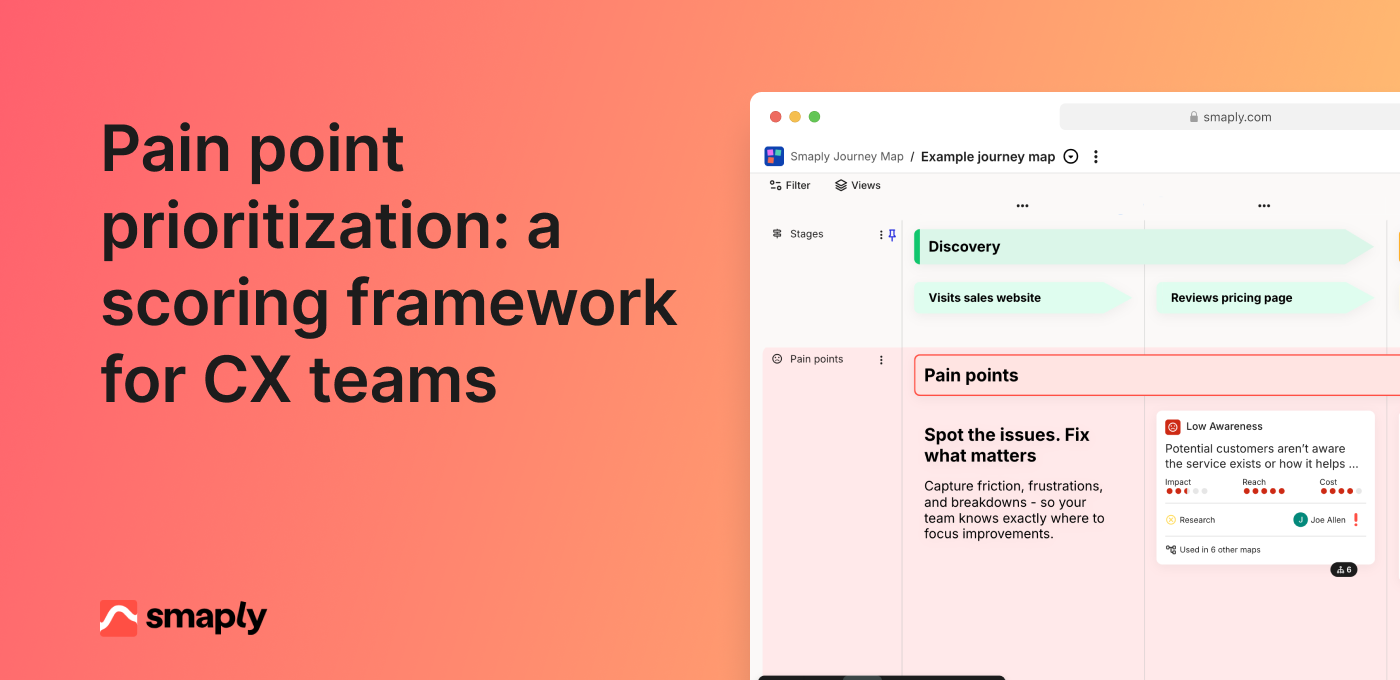
Score them on impact versus effort so the shortlist is defensible when someone asks why these and not those. Then deliberately pick a couple of easy, visible wins to tackle first. Early proof that the map produces results does more for its credibility than any presentation. Each item on the list should be a concrete next step with a clear shape, not a vague theme like "improve onboarding."
3. Give every priority an owner and a date
The single most common reason follow-through stalls is that the priorities belong to everyone, which means no one is actually moving them. Assign a named owner and a deadline to each action item. Not a team. A person.
Assign ownership of the map itself here too. One person should be responsible for keeping the current version accurate and for convening the reviews that come next. This is the moment the map stops being a workshop artifact and becomes a managed asset with someone accountable for its life.
4. Schedule the follow-up review before you leave the room
Book the first review two to four weeks out while everyone is still together and calendars are open. Trying to schedule it later, over email, is how it silently disappears. This one step prevents more workshop decay than anything else you can do.
Keep the review lightweight. Three questions cover it: what moved, what is stuck, and what the map should change to reflect what you have learned since. Establishing this rhythm is the practical beginning of journey map governance, the discipline that keeps a map current instead of letting it rot. A map reviewed on a cadence stays trustworthy. One that is never reviewed drifts into fiction.
5. Share it wider than the room
Send the digital map and the action list beyond the people who attended. Product, support, operations, and anyone whose work touches the journey should be able to see it. Sharing widely is more than a courtesy: it builds the collective ownership that makes the map a shared reference point instead of one team's private artifact.
Put it somewhere findable and singular. One current version, in one place people can reach, beats five forks scattered across inboxes and drives. The moment there are competing copies, trust in all of them drops.
From artifact to working document
A working document is one that stays connected to the things that keep it honest: an owner, a review cadence, and evidence. Those connections are what separate a living map from a static picture of a moment in time.
The connection most teams skip is measurement. Attach metrics to the priorities you are acting on, so that at the next review you can tell whether the change actually improved the experience rather than debating impressions. A pain point you addressed should have a number attached to it, whether that is a support volume, a completion rate, or a satisfaction score, so progress is visible and arguable from data. Tools like Smaply let you keep those metrics on the map itself, alongside the qualitative pain points, so the evidence and the experience sit in the same view instead of in separate reports no one reconciles.
Once the first map is alive, the expansion path opens up. Validate it with real customers to replace the assumptions you flagged in step one with actual evidence. Map adjacent journeys, or the same journey for other personas, now that you have a working model for how to keep them maintained rather than accumulating a graveyard of one-off artifacts.
This is what customer journey management means in practice. The map is not the end product. It is the interface to continuous decision-making, the shared surface where research, priorities, and delivery stay connected over time.
Treat the after-phase as the real work, and the map stops being a souvenir of a good day and starts being the thing that changes what you build.
Frequently asked questions
How soon after a journey mapping workshop should you follow up?
Digitize the map within about 48 hours, while the context behind each sticky note is still fresh in people's minds. Schedule the first progress review for two to four weeks out. Faster is better across the board, because both the detail of the map and the enthusiasm of the group decay quickly once everyone returns to their day jobs.
How do you stop a journey map from gathering dust?
Give it an owner, a review cadence, and a single findable home. Those three things do most of the work. A map with no one responsible for it, no scheduled review, and no agreed current version will always go stale, no matter how good it looked on the day. Treating the map as a governed working document rather than a workshop souvenir is what keeps it in use.
Who should own the journey map after the workshop?
One named person should be accountable for keeping the current version accurate and for convening reviews. Individual action items from the map should each have their own owner, whoever is best placed to deliver that specific change. Shared ownership by "the team" reliably collapses into no ownership, so resist the urge to leave it collective.
How often should you update a journey map?
Review it on a set cadence and whenever the experience materially changes. As a floor, review annually so it never drifts too far from reality. While you are actively shipping the changes the map inspired, review more often, monthly or quarterly, so the map keeps pace with the experience it is supposed to describe.