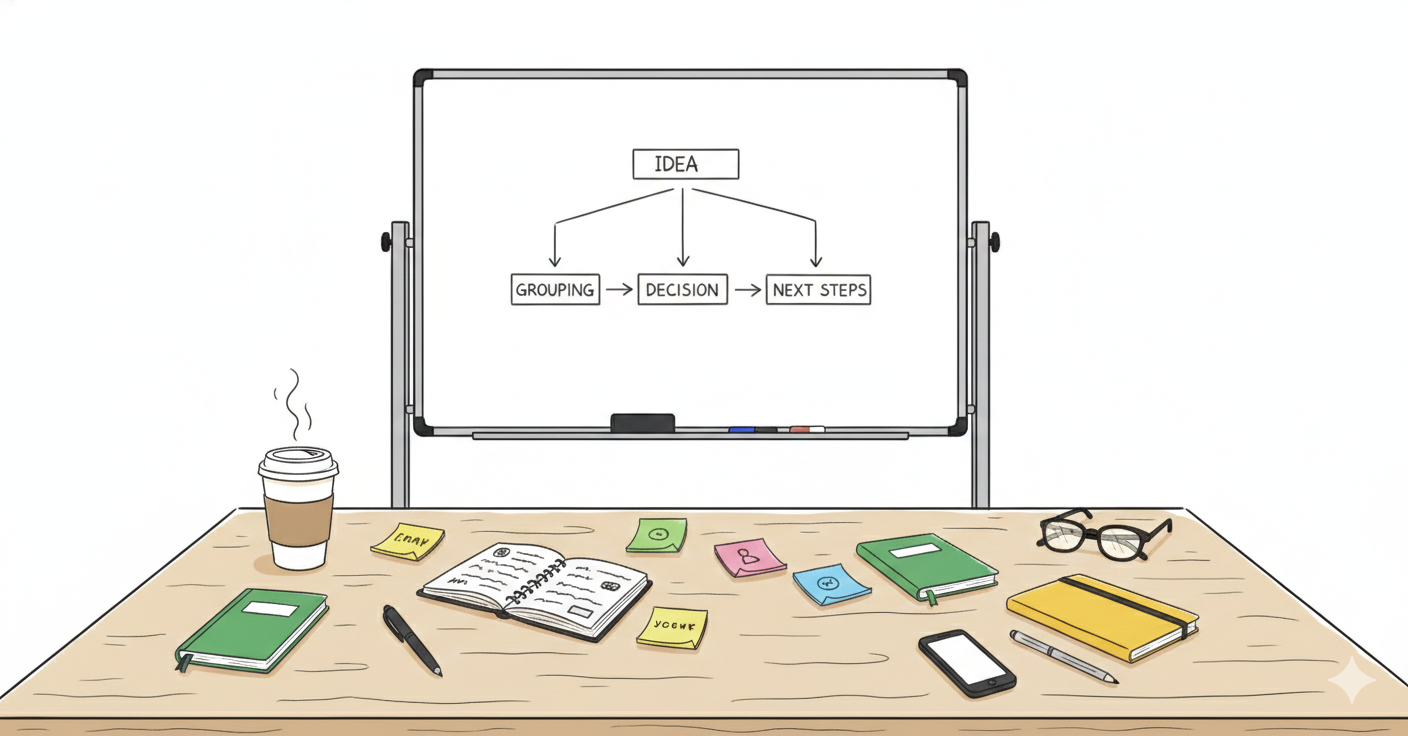
The customer discovers your product, evaluates options, makes a purchase, gets onboarded, and becomes a loyal advocate. It's clean, it's linear, and it represents a fraction of actual customer experiences.
Real journeys include abandoned carts that sit for weeks before someone returns, payment failures that trigger frustration and doubt, confusing error messages that send customers to competitors, support escalations that bounce between departments, and customers who disappear midway through onboarding only to resurface six months later. If your journey map doesn't account for these scenarios, you're optimizing for an idealized version of reality while the actual experience falls through the cracks.
The problem with happy path journey maps
The happy path is the ideal route through a journey. No friction, no confusion, no failures. Customer moves smoothly from stage to stage, everything works, everyone's satisfied.
Happy path maps are useful as a starting point. They establish the intended experience and help align teams around a shared vision. The problem is when teams stop there.
When you only map the happy path, you create blind spots. Teams optimize for scenarios that represent a minority of actual experiences. Product builds features assuming everything works as intended. Marketing promises an experience that operations can't consistently deliver. Support handles the fallout from gaps no one anticipated because no one mapped them.
If your journey map only shows what you hope happens, it's not a map. It's a wish.
What "beyond the happy path" means
Before going further, some definitions.
Happy path is the ideal, friction-free route through a journey. Everything works as intended, and the customer completes their goal without obstacles.
Edge cases are less common but legitimate paths customers take. The customer who uses your product in an unexpected way, the one who needs to pause partway through and resume later, the scenario that doesn't fit your primary persona but still represents real usage.
Breakdowns are moments where the journey fails, stalls, or goes wrong. Technical errors, unmet expectations, communication failures, points where customers get stuck or give up.
Recovery is how customers and organizations get back on track after a breakdown. The experience of resolving a problem, the process of restoring confidence, the path from failure back to success.
Edge cases and breakdowns aren't exceptions to design around. They're where trust is built or lost. A customer who encounters a problem and gets it resolved quickly often becomes more loyal than one who never had an issue at all. But that only happens if you've designed for recovery, which means you first need to know where things go wrong.
Types of journey breakdowns worth mapping
Not every possible failure needs its own branch on your journey map. Focus on the breakdowns that happen frequently, affect customers significantly, or reveal systemic issues.
Abandonment points
Abandonment is when customers exit the journey before completing their goal. Cart abandonment is the classic example, but abandonment happens everywhere: form submissions that never finish, trials that never convert, onboarding sequences that lose people halfway through.
What to capture when mapping abandonment: where in the journey customers leave, why they leave if you know from research or data, what happens after they leave including whether they return and how and when, and what the experience looks like if they try to resume.
Abandonment often isn't a single moment but a gradual disengagement. Mapping it helps you see whether the journey supports re-entry or treats abandonment as a dead end.
Error states and system failures
Payment declines, out-of-stock products, server errors, sessions that time out. These technical failures happen to every organization, but they're rarely visible in journey maps.
Error states matter because they represent high-emotion moments. A customer who's ready to buy and encounters a payment failure isn't mildly inconvenienced. They're frustrated, possibly embarrassed, and reconsidering whether to bother trying again.
Map what the customer sees, what they're told, and what options they're given. Many error experiences offer no useful next step, just a dead end with a cryptic message. That's a design failure layered on top of a technical one.
Escalation and support transitions
When customers move from self-service to human support, something has usually gone wrong. Either they couldn't find what they needed, the automated system failed them, or the issue is complex enough to require human judgment.
These transitions are often rough. The customer has to repeat information, context gets lost, and wait times introduce additional friction. If your map doesn't show what happens when a customer escalates, you're missing one of the most emotionally charged parts of the journey.
Channel switching under duress is particularly important to map. The customer who starts in chat, gets transferred to email, then has to call because nothing is getting resolved is having a very different experience than your happy path suggests.
Edge case personas
Your primary personas represent your most common customers. But some customers don't fit those profiles. They might have accessibility needs your product doesn't fully support, they might use your service in ways you didn't anticipate, or they might have purchasing constraints or approval workflows that don't match your assumptions.
These edge case personas often stress-test journeys in useful ways. The workarounds they develop reveal friction that affects other customers too, just less visibly. Mapping their experience helps you find gaps you'd otherwise miss.
How to identify where journeys break down
You don't have to guess where things go wrong. The data already exists if you know where to look.
Support tickets and complaint patterns. Your support team handles breakdown recovery every day. Categorize tickets by journey stage and issue type, and the clusters tell you where the journey is failing.
Analytics drop-off points. Funnel analysis shows where customers exit. Combine with session recordings or heatmaps to understand why.
Customer interviews. Ask specifically about times things went wrong. Most interview guides focus on positive experiences, so add questions like "Tell me about a time you got stuck" or "What almost made you give up?"
Frontline employee knowledge. Sales, support, and customer success teams know which objections keep coming up, which handoffs always cause confusion, which promises marketing makes that operations can't keep. This knowledge often stays trapped in individual heads. Extract it systematically.
A useful technique: walk through your existing journey map step by step and ask "What could go wrong here?" at each stage. Brainstorm failure modes, then validate which ones actually happen based on data and frontline input.
Your support team already knows where the journey breaks. Ask them.
Smaply lets you show breakdowns, branches, and recovery paths on one map your whole team can read.
Mapping breakdowns and recovery paths
Once you've identified where things go wrong, you need to represent those scenarios in your map.
Adding branches to your journey map
Most journey maps are linear. Customer moves left to right through stages. That structure doesn't accommodate abandonment, loops, or recovery paths.
To map edge cases, you need branches. Show decision points where the journey can fork, show exits where customers leave and potential re-entry points where they might return, and show loops where customers repeat steps or cycle between stages.
Visually, you might use different lanes for non-happy-path flows, different colors for breakdown scenarios, or separate linked maps for major failure paths. The approach matters less than the principle: your map should reflect that journeys aren't always linear.
Documenting the breakdown experience
For each significant breakdown, capture what the customer experiences including what they see, feel, and do. Capture what the organization does or fails to do in response. And capture what backstage processes are involved in the failure and recovery.
A payment failure, for example, involves the customer's experience (error message, confusion, decision to retry or abandon), the front-stage response (what the site shows, what support is available), and the backstage reality (what systems are involved, what information is logged, what triggers any follow-up).
Documenting all three helps you design interventions at the right level. Some breakdowns need better error messages. Some need process changes. Some need both.
Designing recovery into the map
Recovery isn't just fixing the problem. It's restoring trust. A customer who encounters an issue and gets a quick, competent resolution may feel more confident in your organization than one who never had a problem. But only if the recovery is designed, not improvised.
For each breakdown, map the ideal recovery path.
Detection: How do you know the failure happened? Is it customer-reported, automatically logged, or invisible until the customer complains?
Response: What happens immediately? Does the customer get useful information? Does someone on your team get alerted?
Resolution: How is the problem fixed? What's the customer experience during resolution? How long does it take?
Follow-up: How do you confirm the issue is resolved? What happens to rebuild confidence?
Many organizations have good resolution processes but poor detection and follow-up. Mapping recovery end-to-end reveals those gaps.
When to map edge cases vs focus on the happy path
Not every journey map needs comprehensive breakdown coverage. Match your approach to your context.
| Situation | Focus on... |
|---|---|
| Early-stage journey mapping | Happy path first; add edge cases later |
| High-volume journeys with known issues | Prioritize breakdowns that affect most customers |
| Complex or high-stakes journeys (healthcare, finance) | Map edge cases upfront |
| Post-launch optimization | Layer in failure scenarios based on real data |
If you're creating your first journey map for a product or service, start with the happy path. Get alignment on the intended experience before adding complexity.
If you're working on a journey where you already know things go wrong frequently, start with the breakdowns. The happy path is probably understood, and the failure modes are where you'll find improvement opportunities.
For high-stakes journeys where failure has significant consequences, edge cases belong in your initial mapping. In healthcare, a patient who falls through the cracks isn't an edge case to address later. It's a critical scenario to design for from the start.
Turning breakdown insights into action
A mapped breakdown is a breakdown you can fix. But mapping alone doesn't create change. You need to connect failure points to prioritization.
Quantify impact. Which breakdowns cause the most churn, cost, or customer frustration? Use data to prioritize rather than gut feel.
Design service recovery protocols. For common breakdowns, define the ideal recovery experience and train teams to deliver it consistently.
Share across functions. Breakdown maps are powerful alignment tools. When product, operations, and support all see the same failure scenarios documented, conversations about ownership and solutions become more productive.
Track improvement. As you address breakdowns, measure whether the fixes work. Are fewer customers hitting that failure point? Is recovery faster? Is satisfaction improving?
An unmapped breakdown repeats. A mapped breakdown you don't act on also repeats, but at least you know you're choosing to let it happen.
Getting started
You don't need to map every possible failure scenario. Start with what matters most.
Pick one journey that has known problems. Maybe it's onboarding that loses too many customers, maybe it's a support escalation path that frustrates everyone involved, or maybe it's a checkout flow with unexplained drop-off.
Add a "what could go wrong" layer to your existing map. Walk through each step and identify the likely failure modes.
Talk to support and frontline teams. They handle breakdowns daily and can tell you which ones come up repeatedly.
Focus on the highest-impact breakdowns first. The goal isn't comprehensive coverage. It's to stop being surprised by predictable failures.
The best journey maps reflect reality, not just aspiration. That means including the moments where things go wrong and designing paths that bring customers back when they do.
Build maps that reflect what customers actually hit: the friction, the failures, and the paths back.
FAQ
What's the difference between a pain point and a breakdown?
A pain point is friction or frustration within the journey that doesn't stop progress. A breakdown is when the journey fails, stalls, or the customer exits entirely. Pain points are problems to improve. Breakdowns are problems to recover from.
Should I create separate maps for failure scenarios or include them in the main journey?
It depends on complexity. For common failures, add branches to your main map. For major failure paths with multiple steps (like a dispute resolution process), a linked separate map often works better. The goal is clarity, not a single comprehensive artifact.
How detailed should edge case mapping be compared to the happy path?
Focus detail where it matters most. If a breakdown affects many customers or has high consequences, map it thoroughly. If it's rare and low-impact, a note acknowledging it exists may be enough. Match effort to importance.
How do I prioritize which failure scenarios to address first?
Use three criteria: frequency (how often does it happen), impact (how much does it cost in churn, support load, or customer frustration), and fixability (can you actually address it). Start with high-frequency, high-impact issues you can realistically improve.
How do I get teams to take breakdown mapping seriously?
Connect breakdowns to metrics they care about. Show support ticket volume tied to specific failure points. Show churn rates for customers who hit certain breakdowns versus those who don't. Data makes invisible problems visible and creates urgency.